
Confined Space Training
Confined Spaces Scheme Overview
The 6160 Confined Spaces Scheme has made a clear demarcation between ‘Entrants’ and ‘Supervisors’. Entrants are the workers going inside the chambers. ‘Supervisors’ and ‘Managers’, are those controlling people going inside the chambers and / or office staff.
01. Low risk, 02. medium risk, 03. high risk and 08. rescue team members, these are for Entrant courses. They concentrate on the equipment required and how to perform the entry into the various levels of chambers. The 01, 02, 03, are all entry level and standalone courses. The 03 high risk is a prerequisite for the 08 rescue team member course. Delegates for the 03 and 08 courses must be clean shaven.

04. entry controller, 05. supervising teams undertaking work, 06. plan manage review legislation and safety, 07. direct emergency rescue and recovery of casualties. These are all supervisory and managerial courses. They concentrate on the paperwork required and the formalities of getting people in and out of the chambers safely.
The 04 entry controller is a standalone entry level course.
The 02 medium risk or 03 high risk are prerequisites for the 05 supervising teams undertaking work in confined spaces.
The 06 Plan manage and review legislative and safety compliance is primarily an office-based job. Suited for an experienced confined space worker & health and safety worker. They will hold a portfolio of work experience and you must hold a formal H&S qualification.
The 08 rescue team member is a prerequisite for the 07 direct emergency rescue & recovery.
It also looks at controlling paperwork and documentation for large sites such as hospitals, universities and MOD establishments. These will all control multiple confined spaces. In some cases, this will be the duty of your H&S experts also known as an ‘AP’ Authorised Person.
01: Work in low risk confined spaces
Unlike many other organisations Qualsafe courses are fully accredited by Ofqual Qualsafe were the first organisation to do this once HSE deregulated First Aid Training.
With the current COVID restrictions limited training can be resumed with additional control measures in place. All courses are run on site reducing contact to one one other person and all courses limited to a maximum of 8 delegates. Temperature checks, hand sanitiser, masks and gloves are all provided.
Everyone gets their own manikin with a fresh set of lungs, bandages and face shield (No change there). Delegates all get their own pocket mask to use and keep at the end of the course.
01: Work in low risk confined spaces
Duration: (1 Day-Standalone-Entry level course)
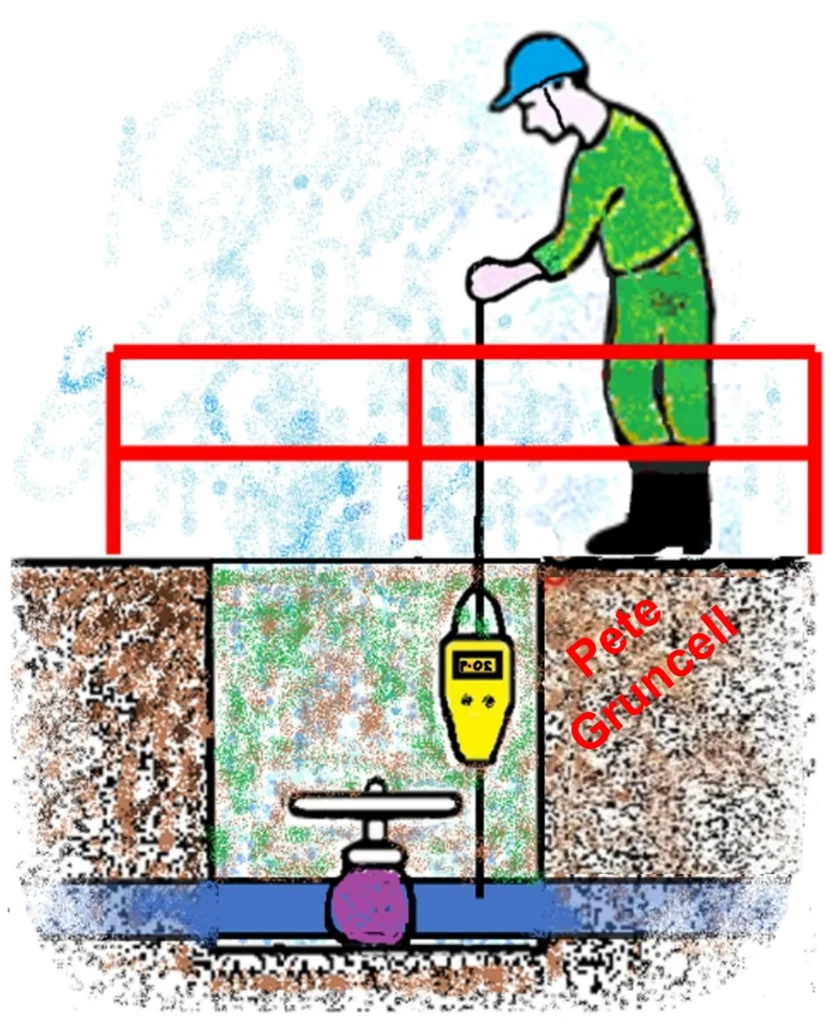
A low risk confined space exists where there is easy entry/exit and natural ventilation. Candidates will check the atmosphere with a gas monitor prior to entry. If the gas monitor alarms, then do not entre and notify the entry controller immediately.
If a gas monitor alarms while working in a low risk confined space then, candidates must exit the confined space immediately and notify the entry controller.
Low risk confined spaces is the only place you can have a lone worker, but this requires appropriate procedures.
Additional low risk NC1 characteristics
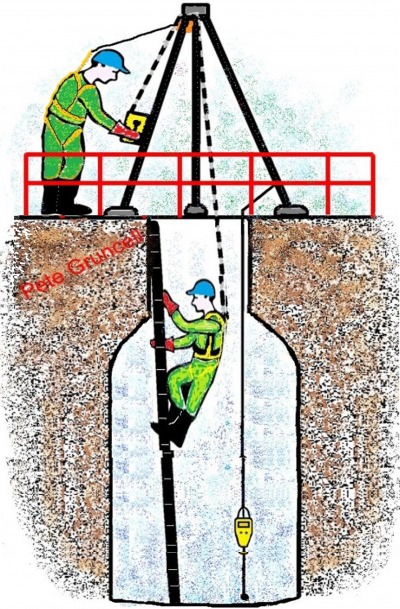
- Not deeper than 3 meter’s, with an unobstructed vertical entry
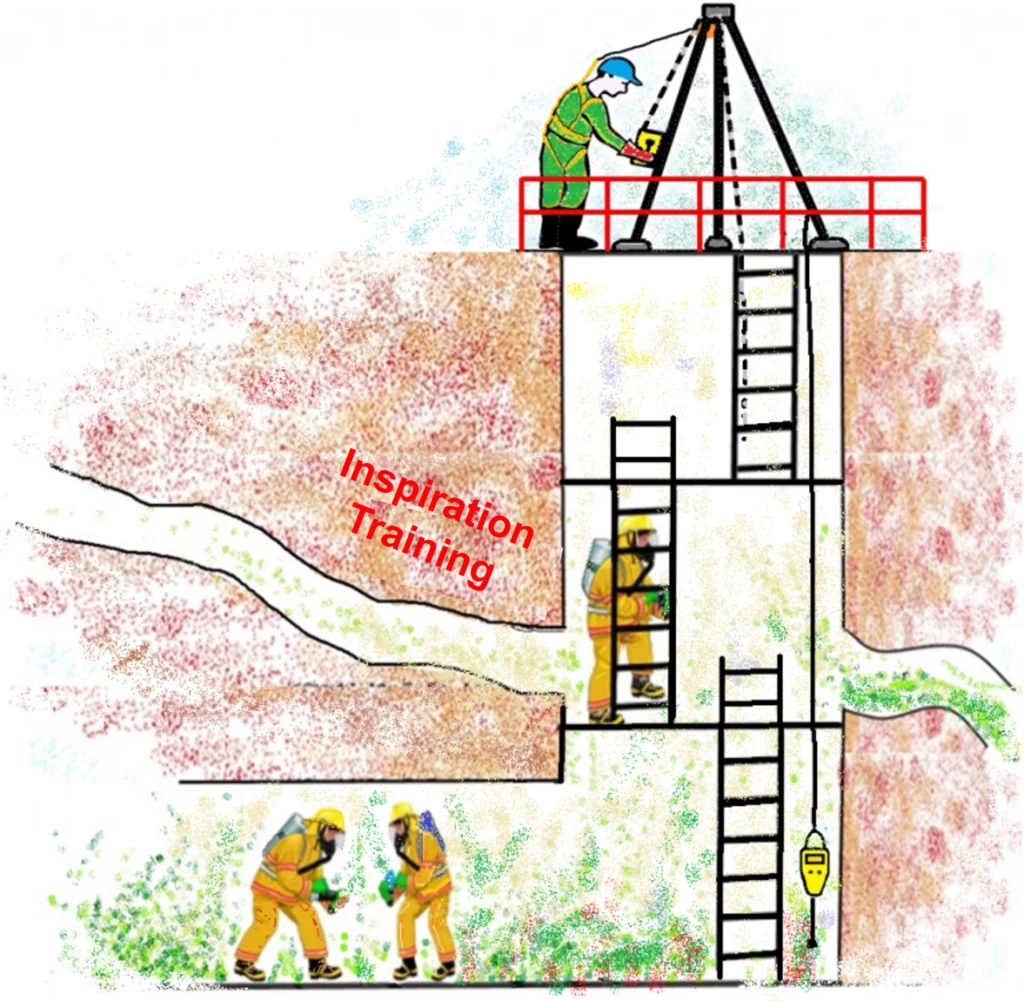
- Straight ladder into a dark chamber
- During completion of the course scenarios to assess candidates’ ability to solve problems and deal with incidents whilst in the confined space
- Candidates should have access to fall arrest and retrieval equipment
Equipment Requirements for Working in Low Risk Confined Spaces
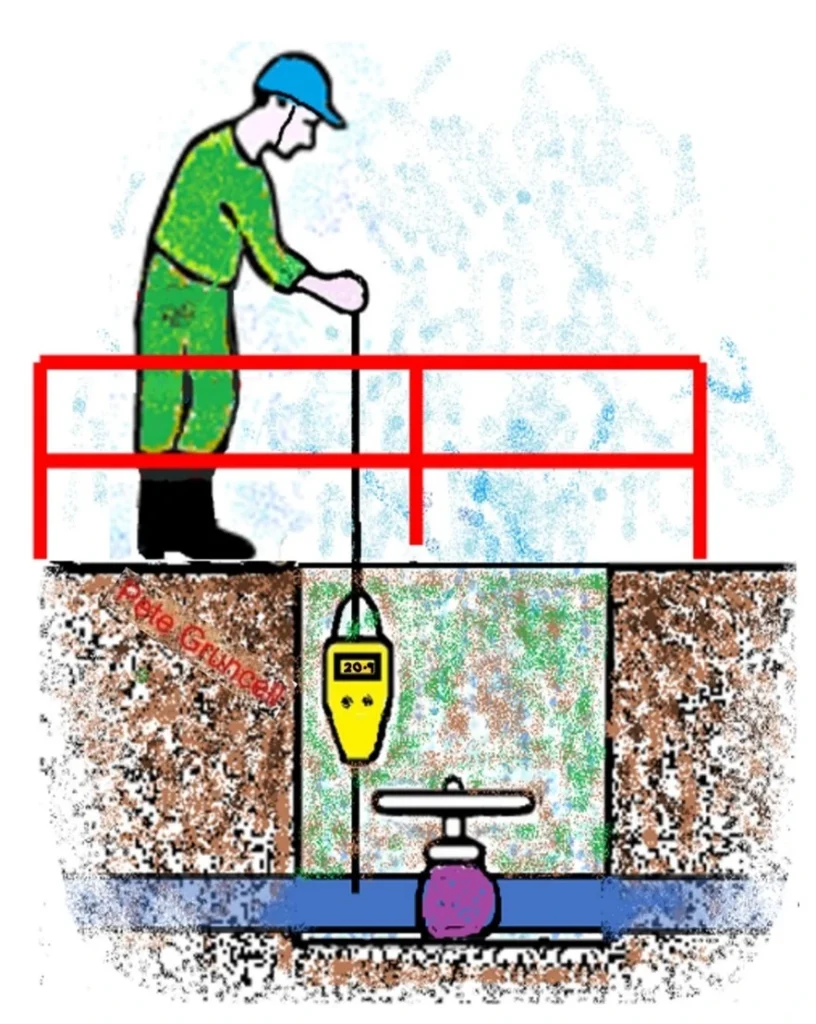
Safety harnesses and fall arrest systems as required by the Working at Height Regulations to appropriate specification
- Full body harness with safety certification
- Energy absorbers with safety certification (optional)
- Fall arrest systems with safety certification
- The equipment selected should reflect the industry areas in which candidates may be working
Personnel winch (tripod or similar mounted)
- A fall arrest block with retrieval system or safety winch incorporating overrun protection and fall protection, complete with safety
- Any fall arrest block or winch supplied should have cable capacity for the intended shaft or manhole being
- Where a fully suspended decent is planned – the rescue lifeline is additional to the man- riding system
Delegate requirements:
PPE to include safety boots, gloves, hard hat, full body coverage. Knee pads are desirable.
Be physically fit and weigh no more than 136kg
Minimum age: 18
Arrive ready to start at 0800 hrs
Exc VAT £209 / Inc VAT £250.80, Includes all training costs, C&G registration and card. Variable prices apply for 6 or more delegates (Minimum day charge £700 plus travel & VAT)
The above prices assume cleared payment is made within 14 days of training, otherwise different rates apply. These start with payment 15-30 days after training, incurring an extra 20% of the overall cost.
02: Work in medium risk confined spaces
Duration: (2 Day-Standalone-Entry level course)
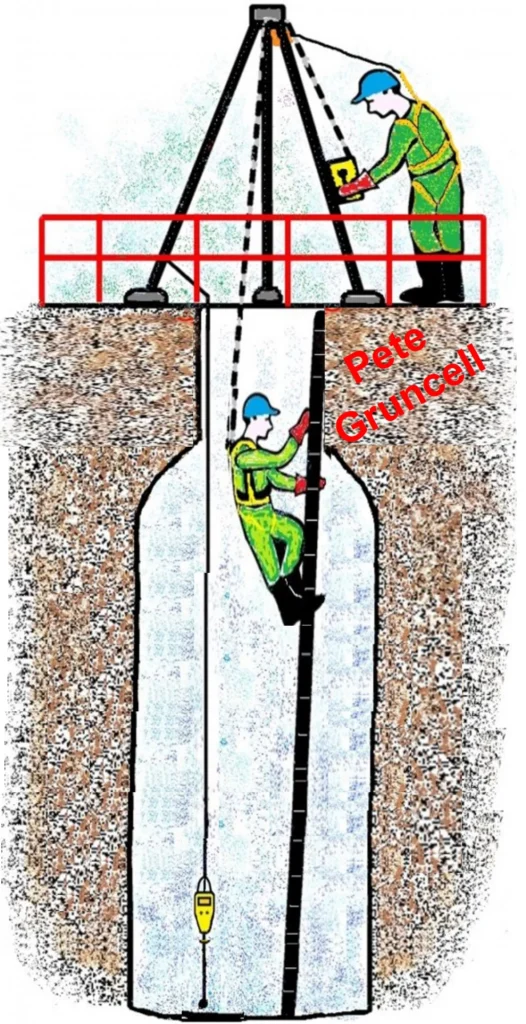
A medium risk confined space exists when there are access issues; a realistic expectation of encountering a specified risk; possible introduction of specified risks during the work activity.
If the gas monitor alarms, do not enter and immediately notify an appropriate person.
As this is a medium risk environment, everyone must enter the confined space with their EBA.
Upon encountering a specified hazard, everyone will put on their EBA and exit immediately in a controlled manner.
NC2 Vertical direct unobstructed access with continuous attachment to a winch, fall arrest or similar mechanical rescue device.
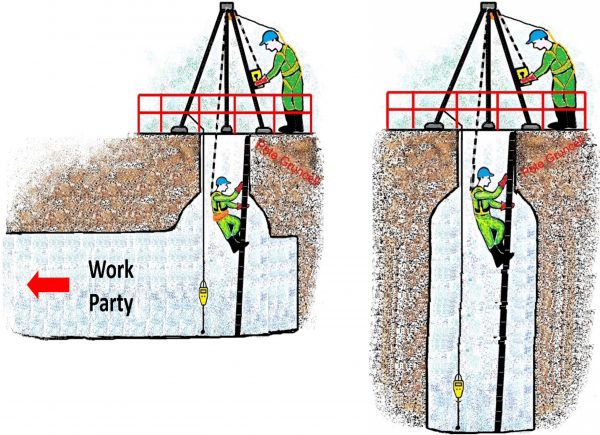
NC3 When it is not possible to have persons permanently attached to a safety line. Usually, it will be a team entry which moves away from the entry point. eg sewers and utility service subway tunnels, aqueducts and complex wet wells. Working detached from a rescue line and includes working away from the entry point but on an unobstructed horizontal plane.
This qualification must be assessed in a medium risk environment. For standardisation, please ensure that a confined space is used that meets the water industry NC3 setting.
Additional medium risk NC3 characteristics
- Deeper than 3 meters in one or two ladders but requiring fall
- Dark, but any real hazard due to access arrangements clearly visible when using portable lighting
- Able to move a reasonable distance away from the access point, estimated at 30 meters, giving a working team of five the opportunity to become spread
- The use of escape breathing apparatus should be considered necessary for all except the link person /bottom man (bottom of the ladder)
- During the task simulate real life scenarios to assess candidates’ ability to solve problems and deal with incidents whilst in the confined space
- All candidates must be assessed using escape breathing apparatus (open/closed circuit)
Equipment Requirements for Working in Medium Risk Confined Spaces
Respiratory Protective Equipment (RPE)
- Self-contained compressed air positive pressure escape breathing apparatus with ten minutes nominal duration. The equipment selected should reflect the industry areas in which candidates may be working. Assessment may be carried out using either facemask type or hood type equipment. (Spare cylinders to maintain training exercises will be required)
- Self-contained closed circuit oxygen re-breather (chemical) escape breathing apparatus. Training sets should be purchased; these do not contain oxygen- generating
- A supply of appropriate disinfecting and cleaning cloths should be available for facemask cleansing before and after
- Portable air horns for signalling purposes.
- Radios (intrinsically safe preferred)
- Other types of signalling devices can be used
Delegate requirements:
PPE to include safety boots, gloves, hard hat, full body coverage. Knee pads are desirable.
Be physically fit and weigh no more than 136kg
Minimum age 18
Arrive ready to start at 0800 hrs
Exc VAT £399 / Inc VAT £478.80, Includes all training costs plus C&G Registration and card. Simply add my travel costs and VAT. Reduced rates for 6 or more delegates, (Minimum day fee £700 plus travel & VAT)
The above prices assume cleared payment is made within 14 days of training, otherwise different rates apply. These start with payment 15-30 days after training, incurring an extra 20% of the overall cost.
Individual Open Courses
We don’t just cater for groups we also look after individuals that need training. For this you can book individuals or smaller groups on to one of our our open courses at the Churchill Hotel, Swindon, SN48ET. M4 Jun 16 go towards Wotton Bassett, roundabout 2nd exit 100m on the right. £410 plus VAT fully inclusive
CITB Funding: If you are in the construction industry and pay a CITB levy, then you might qualify for part funding
What’s included:
- £60 of your fee is for City & Guilds registration, A4 certificate & personal card
- Coffee / Tea / Water are provided throughout the day, with lunch provided on both days
- Plenty of Free Parking for all delegates
- Easily accessible from the M4 Junction 15 / A419
Qualification
- Meets all requirements of the Water Industries, CITB and Utility companies
- Valid for 3 years
- You will know your results before you leave
- Maximum of 10 delegates on any course
Times
- Day 1:
Arrive 0745 hrs to complete paperwork
Start 0800 hrs – Finish 1700 hrs - Day 2:
This is the assessment and will finish earlier than day 1
PPE requirements
Protective boots, hard hat, gloves, knee pads, body coverage, and clothing suitable for the time of year as you will be outside for about 2 hours each day. Please no muddy boots as this is a hotel, and PPE will not be required until about 1330 hrs on day 1.
Open Course Available Dates, click on date to book course:
Mon 23rd & Tue 24th Feb 2026 (Sold out)
Mon 23rd & Tue 24th Mar 2026
03: Work in high risk confined spaces
Duration: (3 Day-Standalone-Entry level course)
Delegates must be clean shaven
A high risk confined space exists when there is a specified hazard that cannot be controlled or eliminated. There may or may not be access issues and candidates are expected to carry out their work activity in the presence of this specified risk.
An exit from this confined space is triggered when pre-arranged safety margins are breached.
As this a high-risk environment, candidates must enter with appropriate respiratory protective equipment (RPE) and wear it throughout the operation.
This qualification must be assessed in a high-risk environment. For standardisation, please ensure that a confined space is used that meets the water industry NC4 or NCX setting.
NC4/NCX Complex access and egress that do not meet any of the classifications above or involving complex operations which introduce additional risks and require specific controls and rescue arrangements eg mechanical hazards, physical complexity of system introduced hazards, enhanced specific intrinsic hazards.
Delegate requirements:
- PPE to include safety boots, gloves, hard hat, full body coverage. Knee pads are desirable.
- Be physically fit and weigh no more than 136kg and be clean shaven (Otherwise may be removed from the course)
- Minimum age 18
- Arrive ready to start at 0800 hrs
Exc VAT £520 / Inc VAT £624, Includes all training costs, C&G registration and card, just add my travel costs. Reduced rates for 6 or more delegates, (Minimum day fee £700 plus my travel & VAT)
The above prices assume cleared payment is made within 14 days of training, otherwise different rates apply. These start with payment 15-30 days after training, incurring an extra 20% of the overall cost.
08: Work as a member of a rescue and recovery team in confined spaces
Duration: (3 Day- Follow on course)
Delegates must be clean shaven and should hold a First Aid qualification
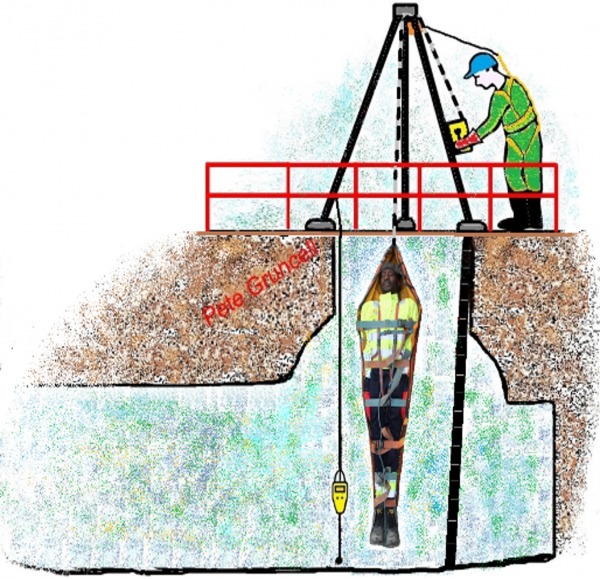
This qualification is about working in confined spaces as a member of a rescue and recovery team. An emergency team will need to be available when the risk assessment for a confined space determines that it is necessary. An emergency team is a dedicated team and may be an in-house team, specialist contractors or the emergency services by prior arrangement.
This qualification includes preparing to carry out emergency activities, entering and exiting confined spaces safely, using emergency equipment, casualty recovery and handling devices in accordance with manufacturers’ specifications, rescuing and recovering casualties, following procedures and working safely.
During completion of the task Centres should simulate real life scenarios to assess candidates’ ability to solve problems and deal with incidents and emergencies whilst in the confined space
Important: completion of this qualification requires a pre-requisite of 6160-03*.
- Equivalent qualifications must cover the same content as the current National Occupational Standards and be confirmed by the centre. The centre must submit a Centre Update Form (CUF) to their City & Guilds Quality Team to advise of the equivalent
Centres must always ensure that the learner has achieved the qualification and retained the pre-requisite knowledge before they enrol on a programme. The EQA may request to see evidence of this during their next routine quality activity. Evidence should be certified copies of certificates, supported by notes from a professional discussion or a ‘skills scan’ that has been reviewed by a qualified assessor.
Equipment Requirements for Emergency Rescue and Recovery
- Self-contained compressed air positive pressure demand breathing apparatus of nominal duration 30 minutes to appropriate specification. The equipment selected should reflect the industry areas in which candidates may be working. (Spare cylinders to maintain training exercises will be required)
- Air-line or trolley set compressed air breathing apparatus complete with spare cylinders, nominal duration one hour complying with appropriate
- An artificial casualty, to be anatomically correct as reasonable for the exercise involved. This casualty should be in the region of 50-60kg. Risk assessments, including manual handling, for the practical exercises must include the handling of this “casualty”
- Hand operated resuscitators
- Oxygen assisted resuscitator
- Static and portable first aid kits
- Face shields for demonstrating rescue breaths
- Resuscitation manikin plus extra face parts or disinfection equipment
- Training versions of AEDs (automatic external defibrillator)
Delegate requirements:
- MUST HOLD 6160-03 HIGH RISK ENTRY
- Should hold a First Aid qualification
- PPE to include safety boots, gloves, hard hat, full body coverage. Knee pads are desirable.
- Be physically fit and weigh no more than 136kg and be clean shaven (Otherwise may be removed from the course)
- Minimum age 18
- Arrive ready to start at 0800 hrs
Exc VAT £520 / Inc VAT £624, Includes all training costs, C&G registration and card, just add my travel costs. Reduced rates for 6 or more delegates, (Minimum day fee £700 plus my travel & VAT)
The above prices assume cleared payment is made within 14 days of training, otherwise different rates apply. These start with payment 15-30 days after training, incurring an extra 20% of the overall cost.
09: Medium risk entrant and entry controller
Duration: 2 Day Course
By far the most popular course
This meets both requirements of medium risk entrant and medium risk entry controller, done over two days, same as the 6160-02 medium risk entry course. This means there may be a need to do more entries and the question paper is slightly longer to cover the additional content
As well as performing the entry, this qualification is about controlling the entry and exit into medium risk confined spaces and also the arrangements that need to be in place to keep them safe while they are there.
It includes controlling the pre-entry procedures and entry into and out of medium risk confined spaces, maintaining communications with team members who are in confined spaces, monitoring equipment readings, raising the alarm and initiating emergency arrangements
To meet the full requirements of the National Occupational Standards underpinning the qualification the assessment will take place in a medium-risk context.
In addition to the above, all conditions pertaining to 6160-02 will apply to all personnel.
Where working with larger groups it may be necessary to rotate the roles within a group entry to ensure all candidates have the opportunity to demonstrate the necessary criteria.
Throughout the qualifications’ assessment criteria, reference is made to risk assessments which are carried out at different times whilst working on confined spaces.
Equipment Requirements for Emergency Rescue and Recovery
- Self-contained compressed air positive pressure demand breathing apparatus of nominal duration 30 minutes to appropriate specification. The equipment selected should reflect the industry areas in which candidates may be working. (Spare cylinders to maintain training exercises will be required)
- Air-line or trolley set compressed air breathing apparatus complete with spare cylinders, nominal duration one hour complying with appropriate
- An artificial casualty, to be anatomically correct as reasonable for the exercise involved. This casualty should be in the region of 50-60kg. Risk assessments, including manual handling, for the practical exercises must include the handling of this “casualty”
- Hand operated resuscitators
- Oxygen assisted resuscitator
- Static and portable first aid kits
- Face shields for demonstrating rescue breaths
- Resuscitation manikin plus extra face parts or disinfection equipment
- Training versions of AEDs (automatic external defibrillator)
Generic Risk Assessment
Generic risk assessments cover common hazards for a task or activity. A generic risk assessment will often be used for similar activities or equipment across different sites, departments or companies. It can act as a risk assessment template, covering the types of hazards and risks that are usually present for the activity.
The idea behind generic risk assessment is to cut down on duplication of effort and paperwork. This type of risk assessment will consider the hazards for an activity in a single assessment, where that activity may be carried out across different areas of the workplace or different sites.
Site-Specific Risk Assessment

A site-specific risk assessment is a risk assessment that has been completed for a specific item of work that takes account of the site-location, environment, and people doing the work.
A site-specific risk assessment will do more than look at common hazards. It will also address the unusual hazards that might only apply to that specific situation, on that particular day.
https://www.haspod.com/blog/paperwork/types-of-risk-assessment
Point of Work Risk Assessment (POWRA)
A Point of Work Risk Assessment (POWRA) is a workplace risk assessment carried out prior to start of activity. It is used to identify those things, situations, processes and activities that may cause harm particularly to people. One completed POWRA form can apply to the whole team.
https://public-library.safetyculture.io/products/point-of-work-risk-assessment-powra-0hy5g
Delegate requirements:
- PPE to include safety boots, gloves, hard hat, full body coverage and knee pads are desirable.
- Be physically fit and weigh no more than 136kg
- Minimum age 18
- Arrive ready to start at 0800 hrs and runs through to 1700 hrs
Exc VAT £399 / Inc VAT £478.80, Includes all training costs plus C&G Registration and card. Simply add my travel costs and VAT. Reduced rates for 5 or more delegates, (Minimum day fee £700 plus travel & VAT)
The above prices assume cleared payment is made within 14 days of training, otherwise different rates apply. These start with payment 15-30 days after training, incurring an extra 20% of the overall cost.
Individual Open Courses
Net cost £420, VAT £84 Total £504
We don’t just cater for groups we also look after individuals that need training. For this you can book individuals or smaller groups on to one of our our open courses at the Churchill Hotel, Swindon, SN48ET. M4 Jun 16 go towards Royal Wootton Bassett, roundabout 2nd exit 100m on the right.
CITB Funding: If you are in the construction industry and pay a CITB levy, then you might qualify for part funding by CITB
What’s included:
- £80 of your fee is for City & Guilds registration, A4 certificate & personal card
- Coffee / Tea / Water are provided throughout the day, with lunch provided on both days
Plenty of Free - Parking for all delegates
- Easily accessible from the M4 Junction 16
- Valid for 3 years
Times
- Day 1:
Arrive 0745 hrs to complete paperwork, start 0800 hrs – Finish 1700 hrs - Day 2:
This is the assessment and will finish earlier than day 1
PPE requirements
Protective boots, hard hat, gloves, knee pads, body coverage, and clothing suitable for the time of year as you will be outside for about 2 hours each day. Please no muddy boots as this is a hotel, and PPE will not be required until about 1330 hrs on day 1.